Jemaa el Fna Square: 10 Best Things to See
Jemaa el Fna Square is where ancient traditions come alive before your eyes. Imagine stepping into a world filled with the scent of exotic spices, the rhythm of traditional music, and the vibrant energy of a thousand stories unfolding at once. This legendary public space in Marrakesh captures the very soul of Moroccan culture.
For centuries, this UNESCO World Heritage site has served as the true heart of the city, a living theater where Moroccan culture thrives. Your experience here will feel like traveling back in time while being fully present in the moment.
This iconic place pulsates with energy from sunrise to late night. Street performers, food vendors, and storytellers create an unforgettable spectacle that changes throughout the day. Your trip to Morocco remains incomplete without immersing yourself in this cultural hub.
Today, this historic site continues to function as it has for generations. Locals and visitors converge here to witness authentic traditions. This guide will help you navigate the 10 best things to see, ensuring you make the most of your visit to this remarkable destination.
Key Takeaways
- This historic marketplace serves as the cultural center of Marrakesh with UNESCO World Heritage status
- The atmosphere transforms dramatically from morning to night, offering different experiences
- Authentic Moroccan traditions come alive through street performances and local interactions
- Proper planning ensures you witness the most captivating aspects of this vibrant space
- The location connects seamlessly to other major attractions like the Koutoubia Mosque
- Understanding the daily rhythm helps you experience both tourist and local perspectives
- This destination represents an essential part of any complete Moroccan travel itinerary
Historical Roots and Cultural Evolution
The story of this iconic space begins in the 11th century with the Almoravid dynasty’s vision for a new imperial capital. When Abu Bakr ibn Umar founded Marrakesh in 1070, this central gathering place emerged as an essential part of the city’s layout.
Ancient Beginnings and Early History
Originally called Rahbat al-Ksar (“the place of the fortress”), this area served as the civic heart from its earliest time. Almoravid emir Ali ibn Yusuf built a palace here with a stone gate where justice was publicly dispensed.
After the Almohads conquered Marrakech in 1147, they constructed the nearby Kutubiyya Mosque. This shifted the city’s focus but the square remained a vital gathering place.
Saadian Legacy and Architectural Shifts
The name “Jemaa el-Fna” carries multiple meanings that reveal complex history. One translation suggests “assembly of the dead,” referencing public executions around 1050 CE.
In the late 16th century, Sultan Ahmad al-Mansur attempted to build a grand Friday mosque in the center of Djemaa Fna. Plague outbreaks forced him to abandon the project, leaving an unfinished structure that fell into ruins.
This abandoned mosque project gave the square its current name when it first appeared in 17th-century records. The intended “Mosque of Tranquility” became known as the “Mosque of ruination” after its abandonment.
A Daytime Journey Through the Square
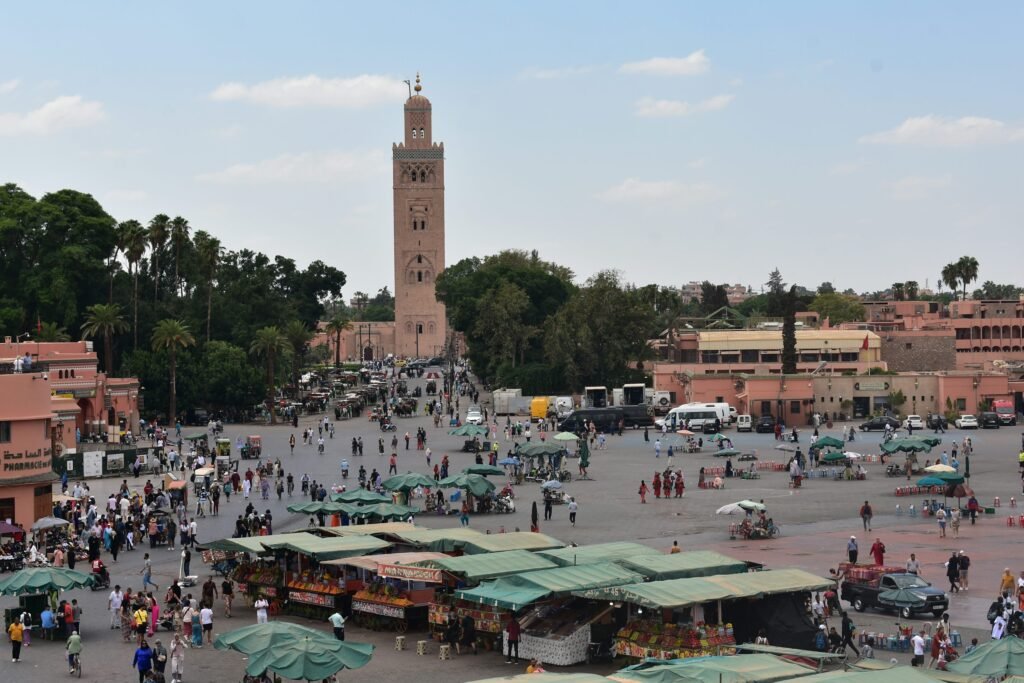
Morning light reveals a different character to this UNESCO World Heritage site, where daily life unfolds in fascinating layers. The frantic energy of night gives way to a more measured pace during the day. You’ll discover a space that serves practical needs alongside tourist attractions.
Early hours bring orange juice vendors setting up colorful stalls with mountains of fresh fruit. The scent of citrus fills the air as they squeeze drinks for about 50 cents. This refreshing way to start your day connects you to local traditions.
Traditional Food Stalls and Market Life
As the morning progresses, food stalls begin appearing throughout the area. Vendors prepare snail broth stations and other Moroccan specialties. Traditional carts serve dates alongside fresh orange juice.
The market atmosphere brings local people shopping for daily necessities. You’ll find spices, traditional medicines, and authentic ingredients. This genuine marketplace functions for both residents and visitors.
Atmosphere and Local Interactions
Snake charmers arrive early with their baskets, though ethical concerns surround these practices. Traditional water sellers wear distinctive costumes while offering drinks from leather bags. This centuries-old tradition adds cultural depth.
After 2 pm, cars leave the space, transforming the area completely. People move freely as preparations begin for evening events. The square becomes a meeting place for locals going about daily routines.
Experience Jemaa el Fna Square: A Living Cultural Hub
Your evening visit reveals why this gathering place earned international recognition for preserving intangible cultural heritage. UNESCO declared it a Masterpiece in 2001 specifically for bringing urban legends to life through daily performances.
The entertainment here follows traditions dating to the 11th century. You’ll witness the halqa tradition where circles form around performers. This creates an intimate experience where spectators become part of the show.
Street Performances and Oral Traditions
Amazigh musicians play traditional instruments while gnaoua troupes perform spiritual songs. Acrobats execute impressive feats that captivate audiences. These sounds and movements have echoed through this space for generations.
Storytellers once formed the heart of djemaa fna entertainment. They recounted epic legends to rapt audiences. Sadly, few traditional narrators remain today.
Your experience varies each visit because the show never repeats exactly. Different performers and changing energy create unique atmospheres. Locals still gather alongside tourists, showing this remains a genuine community space.
Despite cultural threats, fna square continues as a living museum. Intangible heritage adapts through new expressions while honoring ancient traditions. The people and musicians keep this cultural heartbeat strong.
The Magic of the Night: Transforming the Square
As twilight descends, the atmosphere undergoes a complete metamorphosis that redefines the entire space. The quiet daytime curiosity gives way to an electrifying night spectacle that continues until the early morning hours.
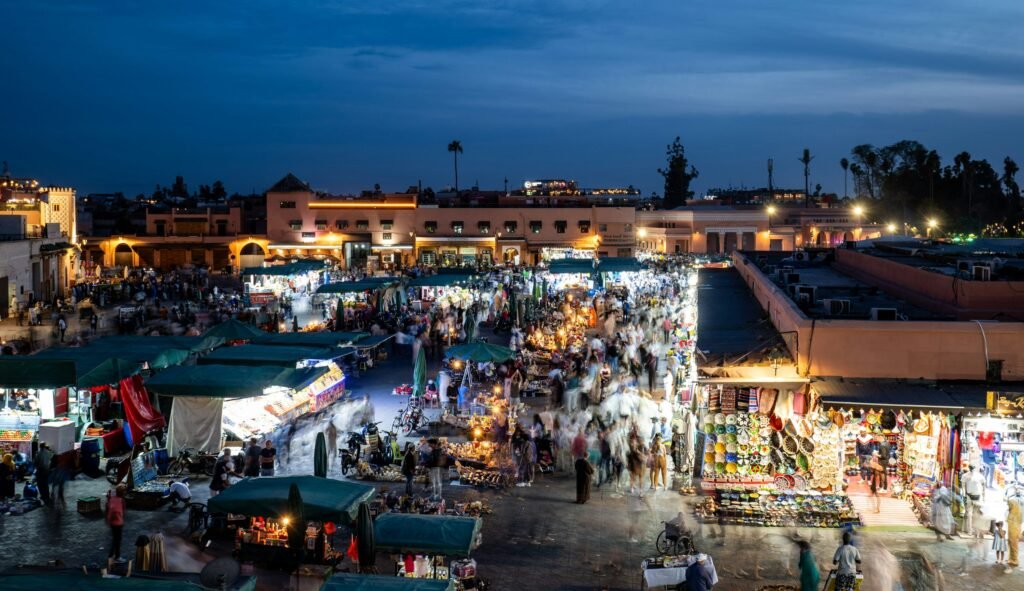
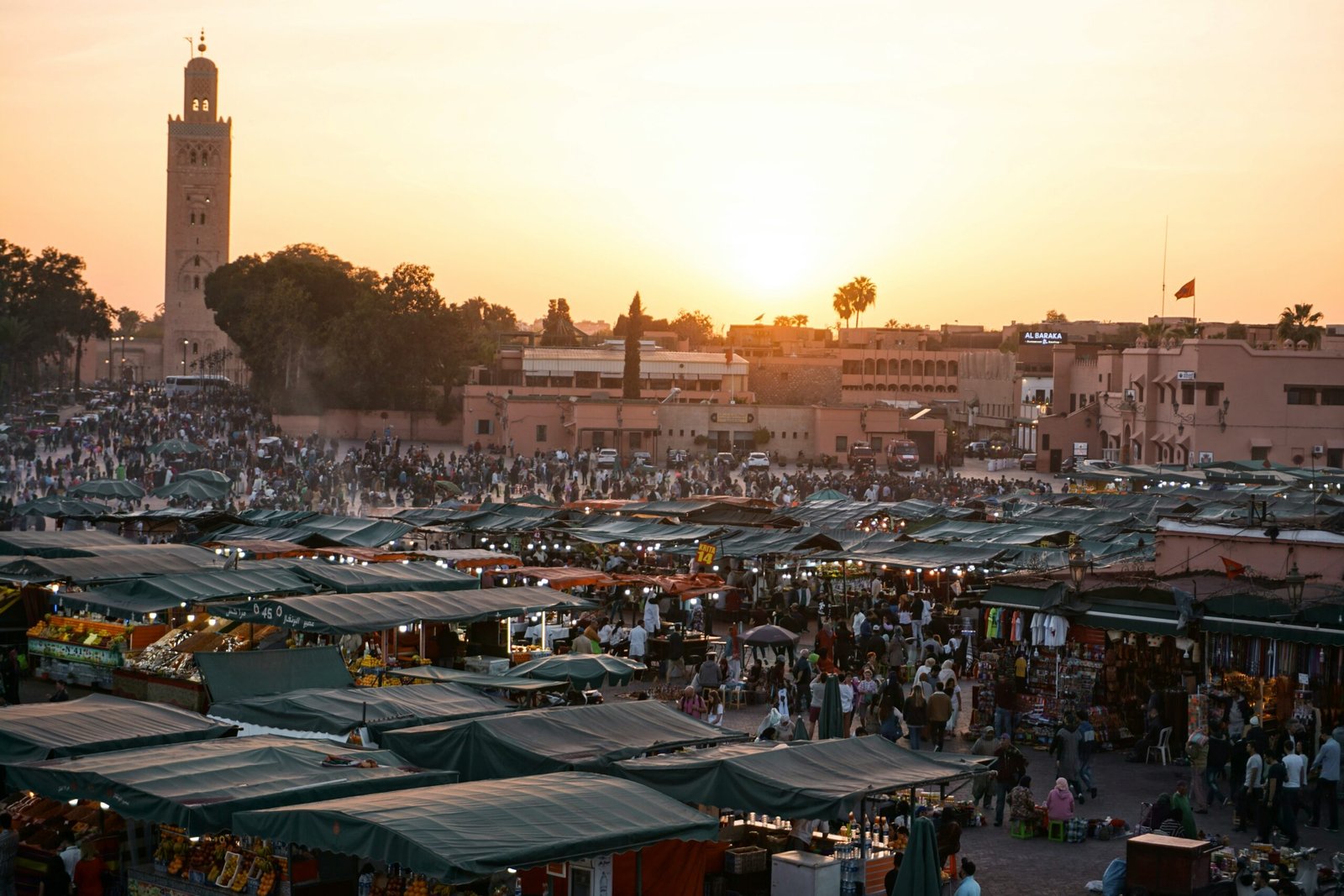
Around 4 pm, vendors begin setting up numbered food stalls in an organized grid. This marks the beginning of your unforgettable evening experience. The scent of grilling meat and spices fills the air as preparations intensify.
Evening Entertainment and Live Performances
At sunset, musicians tune their instruments while performers gather their crowds. The energy builds steadily throughout the evening. You’ll hear traditional music blending with the sizzle of cooking and crowd conversations.
The culinary adventure offers everything from spicy snail soup to flash-fried fish. Stall 14 specializes in seafood while stall 1 serves authentic brochettes and harira soup. Locals and tourists share simple stools around communal tables.
Rooftop Perspectives and Culinary Delights
For a breathtaking view, ascend to one of the surrounding rooftop restaurants. These elevated spots provide front-row seats to the swirling activity below. You can enjoy mint tea while watching the spectacle unfold.
After your meal, join the crowd at the southern edge for khoudenjal—a spiced ginger tea served with traditional cake. The experience continues late into the night, offering ample time to explore different food options and performances.
Local Legends and Timeless Traditions
What makes this UNESCO site truly remarkable isn’t just what you see, but the intangible cultural heritage preserved through generations. The square serves as a living library of oral traditions that have captivated audiences for centuries.
Storytellers, Fortune Tellers, and Artists
For nearly a millennium, this gathering place has hosted master storytellers who shared epic tales. These hikayat performers preserved Morocco’s myths and moral lessons through spoken word. Sadly, few professional storytellers remain today.
Fortune tellers continue mystical traditions using palm reading and card interpretation. Their whispers blend Islamic, Berber, and African spiritual practices developed over time. Locals have consulted these diviners for generations.
You’ll notice artists creating henna tattoos with designs rooted in protective beliefs. Each symbol carries meaning from North African cultural legends. The tradition continues through temporary body art.
Your experience connects you to centuries of oral heritage. While formal storytellers have vanished, the communal listening tradition survives. Circles still form around performers, keeping the spirit alive.
Navigating Modernity Amidst Tradition
Your visit to this iconic gathering place comes during a critical period of transformation and preservation. The square faces constant pressure from urban development while striving to maintain its cultural authenticity.
Renovation Efforts and Urban Impact
A major 160 million dirham renovation began in May 2025 to upgrade infrastructure. This project enhances accessibility while protecting the site‘s historic character. The work represents the latest chapter in conservation efforts dating back to 1922.
UNESCO designated this space as Intangible Cultural Heritage in 2001. Yet the organization warns about threats from urbanization. Your experience today reflects these ongoing tensions.
Balancing Heritage with Contemporary Needs
The city must accommodate modern needs while preserving traditions. This delicate balance affects how vendors organize and performers interact with audiences. The essential character of this place remains despite changes.
Historical challenges have tested this area‘s resilience. From an 1864 explosion to a 2023 earthquake that damaged the Kharbouch mosque, the square has endured. Locals sleeping here after the quake showed its enduring community role.
Your visit connects you to a living part of the city‘s identity. The way this space evolves will shape experiences for future tourists and locals alike. Protection efforts spanning nearly a century continue to safeguard this unique cultural treasure.
Conclusion
No other destination captures the vibrant soul of Morocco quite like this UNESCO-protected public space. Your trip to Marrakesh finds its perfect center here, on the medina’s edge near the Koutoubia mosque.
The location offers excellent accommodation options nearby. You can choose budget hotels or upmarket riads within walking distance. This makes returning easy after late-night food adventures at the stalls.
Plan your time wisely to experience both daytime market atmosphere and evening entertainment. Stay alert in crowds and carry small coins for tipping. Avoid snake charmers due to ethical concerns.
From rooftop restaurants sipping mint tea to bustling food stalls, this place offers authentic experiences. Your visit connects you to centuries of tradition in a living cultural hub that defines the city.
FAQ
What is the best time to visit Jemaa el Fna Square?
The best time to visit is in the evening after sunset. This is when the space truly comes alive with food stalls, musicians, and street performers. The atmosphere is electric and offers a completely different experience from the daytime market.
Is the square safe for tourists at night?
A>Yes, the area is generally very safe and is patrolled by local authorities. It remains crowded with both locals and tourists late into the night. As with any busy place, it’s wise to keep an eye on your personal belongings.
What kind of entertainment can I see there?
You can witness a fantastic array of live performances. This includes traditional storytellers, snake charmers, Gnaoua musicians, and fortune tellers. The nightly show is a centuries-old tradition that continues to captivate visitors.
Are the food stalls safe to eat from?
The food from the stalls is a major part of the experience and is generally safe. Look for vendors that are busy with locals, as this is a good sign. Popular choices include grilled meat, harira soup, and fresh orange juice.
What is the meaning behind the name “Jemaa el Fna”?
The name has several interpretations, but a common translation is “assembly of the dead.” This likely refers to the site’s historical use for public executions. Today, it’s the vibrant heart of the city, full of life.
Can I get a good view of the square from above?
Absolutely. Several cafes and restaurants with rooftop terraces surround the space. They offer a spectacular panoramic view, especially at sunset and in the evening, allowing you to watch the transformation from above.
How do I get to the square from other parts of Marrakech?
The plaza is the central landmark of the medina (old city) and is easy to reach on foot. If you are staying in the new city (Gueliz), a short taxi ride will bring you directly to the edge of the pedestrian area.