Moroccan Cuisine : 5 Trending Recipes Food Travelers Love
Imagine a journey through centuries of flavor. Every bite tells a story of cultural richness and passion. Moroccan cuisine is more than food; it’s a sensory experience that touches the hearts of many.
The vibrant souks of Marrakech and the blue streets of Chefchaouen are just the start. Authentic Moroccan dishes are more than meals. They are a testament to generations of culinary art, mixing spices, techniques, and fresh ingredients to create magic.
Whether you love cooking at home or exploring new places, these five Moroccan recipes will take you on a journey. You’ll see how each dish reflects Morocco’s rich cultural heritage. And you can try them in your own kitchen.
Key Takeaways
- Moroccan cuisine represents centuries of cultural fusion
- Authentic dishes blend complex spices and cooking techniques
- Recipes can be recreated at home with proper ingredients
- Each dish tells a unique story of regional traditions
- Moroccan cooking offers a rich, immersive culinary experience
The Rich Heritage of Moroccan Cuisine

Moroccan cuisine is a colorful mix of history and culture. It shows the nation’s rich past through its flavors. Exploring Moroccan food is like traveling through time.
Ancient Spice Routes: A Culinary Crossroads
The spice routes made Morocco a place where different tastes came together. Traders from all over brought new ingredients. These changed the way Moroccans cooked and ate.
- Berber indigenous techniques
- Arab trading influences
- Mediterranean maritime exchanges
- Sub-Saharan African contributions
These ingredients, like saffron and cinnamon, are key to Moroccan dishes. They add depth and warmth to every meal.
Berber and Andalusian Culinary Traditions
Berber people played a big role in Moroccan food. They used slow cooking and local ingredients. This made meals hearty and flavorful.
- Slow-cooking techniques
- Preservation methods
- Local ingredient utilization
- Community-centered meal preparation
Andalusian cooking added a touch of elegance. It made Moroccan food more than just food. It became an art form.
“Every dish tells a story of migration, trade, and cultural fusion.” – Moroccan Culinary Historian
Essential Spices That Define Moroccan Flavors

Moroccan cuisine is a mix of flavors from different spices. It’s not as spicy as Thai or Indian food. Instead, it creates deep, rich tastes like earthy, sweet, and aromatic.
The secret to Moroccan spices is their balance and freshness. Grinding spices yourself makes a big difference. Pre-ground spices lose their flavor and smell quickly.
Key Spices in Moroccan Cooking
- Ras el Hanout: A complex spice blend with up to 30 different ingredients
- Cumin: Adds earthy warmth to many dishes
- Cinnamon: Provides sweet and woody undertones
- Paprika: Offers mild, sweet pepper flavor
- Saffron: Brings luxurious color and delicate taste
To find real Moroccan spices, check out specialty shops or online stores. Grinding your own spices at home boosts the flavor of your dishes.
| Spice | Flavor Profile | Common Uses |
|---|---|---|
| Ras el Hanout | Complex, warming | Meat rubs, tagines |
| Cumin | Earthy, nutty | Soups, stews, grilled meats |
| Saffron | Delicate, floral | Rice dishes, desserts |
Try these spices to add Moroccan flavor to your cooking. The trick is to use fresh spices and mix them well.
Tagine: The Iconic Slow-Cooked Masterpiece
Moroccan cuisine has a treasure called the tagine. It turns simple ingredients into amazing dishes. The tagine is more than a recipe; it’s a cultural art form that shows Moroccan flavor and hospitality.
The magic of tagine cooking is in its clay pot design. Steam rises and condenses on the cool lid. Then, it drips back into the dish, keeping it moist and flavorful.
Traditional Clay Pot Cooking Methods
Authentic tagine cooking is slow over low heat, often with charcoal. The conical lid spreads heat evenly. This turns ingredients into tender, aromatic dishes.
- Slow cooking preserves ingredient nutrients
- Conical lid promotes natural moisture circulation
- Low heat intensifies complex flavor profiles
Popular Tagine Variations for Food Travelers
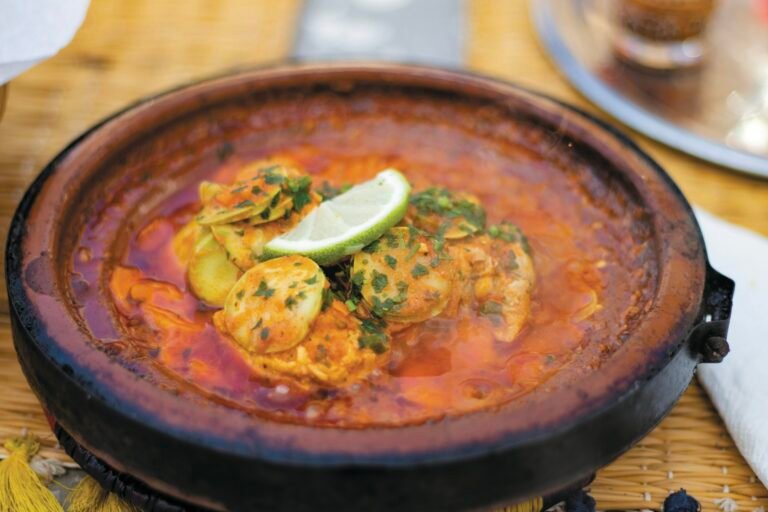
Food travelers will find many delicious tagine recipes. A favorite is chicken roasted with onions, saffron, and ginger. It’s finished with preserved olives and lemons. This dish balances bright, salty-sour notes with rich chicken and briny olives.
“Every tagine tells a story of tradition, family, and culinary passion” – Moroccan Cooking Proverb
Popular variations include:
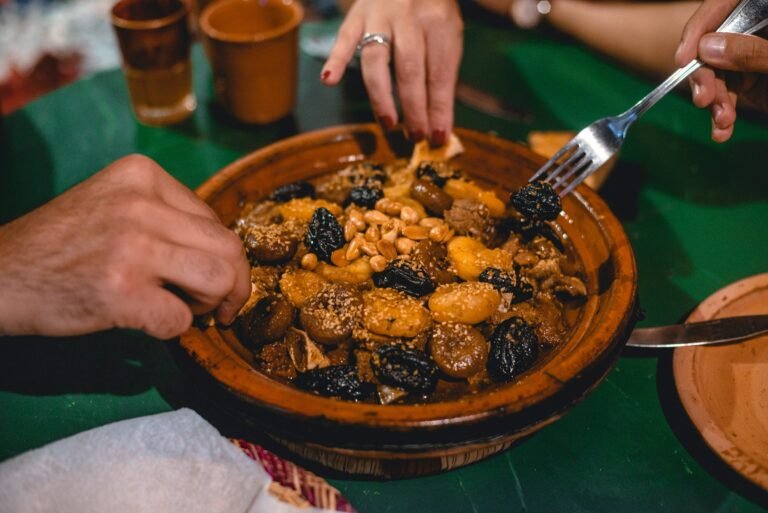
- Lamb with prunes and almonds
- Beef with seasonal vegetables
- Kefta (spiced meatball) tagine with eggs
Each recipe shows regional diversity. Family traditions add unique touches, making every tagine special.
Couscous: Morocco’s Beloved Staple Dish
Couscous is at the heart of Moroccan cuisine. It’s a grain that turns simple ingredients into something magical. This dish is key to bringing families and communities together.
The seven-vegetable couscous is a favorite among vegetarians. It’s a colorful mix of:
- Carrots
- Turnips
- Zucchini
- Cabbage
- Chickpeas
Moroccan cooks love to mix things up with couscous. Couscous with lamb or chicken adds a meaty twist. Coastal areas prefer it with fish. The tfaya couscous is special, with caramelized onions, raisins, and chickpeas on top.
Couscous is great for soaking up flavors. It’s mild, so it lets other ingredients shine. This makes it a perfect base for Morocco’s bold spices.
To get fluffy couscous, follow these tips:
- Steam the grains carefully
- Fluff with a fork
- Never compress the grains
- Allow proper resting time
Whether you like vegetables or meat, couscous is a treat. It shows the true spirit of Moroccan cooking.
Harira Soup: A Bowl of Moroccan Warmth
Dive into the heart of Moroccan culinary tradition with harira, a soul-warming soup. It’s more than just a meal; it’s a cultural experience. It connects generations and celebrates Moroccan hospitality.
Harira is a cherished staple during Ramadan. It offers nourishment and comfort to those breaking their fast. Its deep flavors tell a story of cultural resilience and culinary craftsmanship.
The Ramadan Ritual of Nourishment
During Ramadan, harira becomes a powerful symbol of community and spiritual reflection. Families gather around steaming bowls. They share not just food but connection and tradition.
- Traditionally served at sunset during iftar
- Provides essential nutrients after a day of fasting
- Represents hospitality and shared experience
Crafting the Perfect Harira
Making authentic harira requires skill and patience. The soup blends protein-rich ingredients with aromatic spices. This creates a complex flavor profile that delights the senses.
| Key Ingredients | Flavor Profile |
|---|---|
| Lamb or Chickpeas | Rich, Hearty |
| Tomatoes | Tangy, Bright |
| Lentils | Earthy, Grounding |
| Cilantro and Parsley | Fresh, Aromatic |
“Harira is not just a soup, it’s a journey through Moroccan culinary heritage.” – Moroccan Chef Narrative
Whether you’re experiencing harira during Ramadan or enjoying it as a comforting meal, it offers a glimpse into Moroccan cuisine. Each spoonful tells a story of tradition, warmth, and cultural pride.
Pastilla: The Sweet and Savory Surprise
Explore the magic of pastilla, a Moroccan dish that blends sweet and savory. It changes how you see Moroccan food.
The filling mixes spices like cinnamon, ginger, saffron, and ras el hanout. It’s made with pigeon or chicken, showing Andalusian cooking’s impact.
Layers of Culinary Artistry
What makes pastilla special are its layers:
- Crispy, flaky pastry that shatters delicately
- Tender, spiced meat providing savory richness
- Toasted almonds mixed with sugar and cinnamon
- Powdered sugar dusting for a sweet finish
Toasted almonds add crunch and sweetness. The pie is decorated with powdered sugar and cinnamon lines. It looks as good as it tastes.
| Ingredient | Flavor Profile | Culinary Significance |
|---|---|---|
| Phyllo Pastry | Crisp, Light | Reflects Andalusian Culinary Techniques |
| Spiced Meat | Savory, Complex | Represents Traditional Moroccan Cooking |
| Toasted Almonds | Nutty, Sweet | Adds Textural Contrast |
| Powdered Sugar | Sweet, Delicate | Highlights Sweet-Savory Fusion |
Trying pastilla shows why it’s a culinary gem. Each bite is a mix of flavors that honors medieval Al-Andalus’s cooking.
Chermoula: The Flavor-Packed Marinade
Explore the world of chermoula, a vibrant Moroccan marinade. It turns simple dishes into culinary wonders. This blend captures the essence of Moroccan coastal cuisine. It combines bright lemons, fresh cilantro and parsley, pungent garlic, earthy cumin, and a touch of spice.
Chermoula is more than a sauce—it’s a flavor explosion. It brings Moroccan kitchens to life. Chefs add unique twists, like saffron or chili peppers, to make it special.
Perfect Pairings with Fresh Atlantic Seafood
Morocco’s Atlantic coast is perfect for chermoula’s bold flavors. It’s amazing with a variety of fresh seafood:
- Whole grilled sardines
- Pan-seared sea bass
- Baked sole fillets
- Grilled shrimp
- Tender calamari
To prepare, coat your seafood with chermoula. Then, grill, bake, or pan-fry. This creates a flavorful crust while keeping the inside moist.
Beyond Seafood: Versatile Culinary Applications
Chermoula’s magic goes beyond seafood. It’s great for:
- Roasted vegetables like eggplant and cauliflower
- Grilled pepper medleys
- Flavor base for chicken tagines
- Condiment for grilled meats
Whether you’re cooking at home or exploring new flavors, chermoula brings Morocco’s vibrant food culture to your plate.
Street Food Delights Food Travelers Can’t Resist
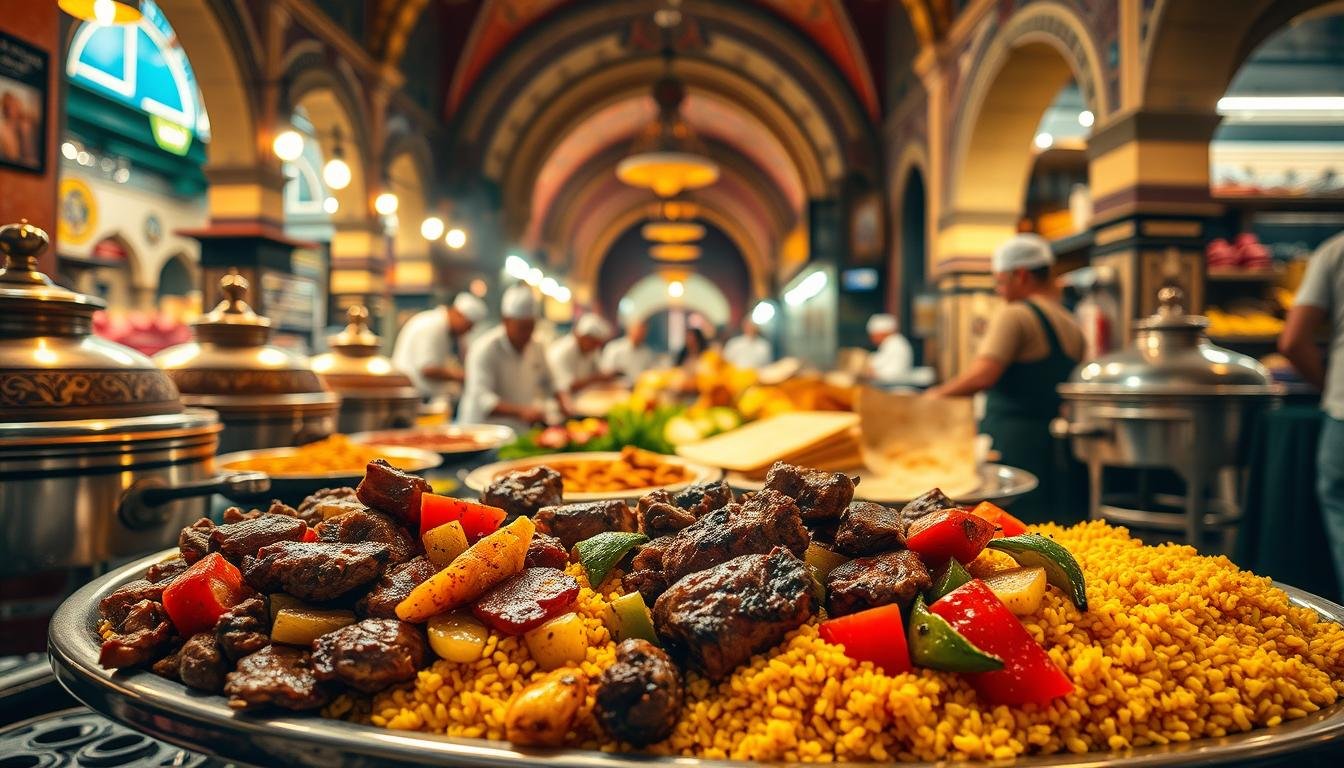
Morocco’s street food scene is full of flavors that take you to Marrakech’s markets. You’ll find crispy Ma’akouda and sizzling brochettes. These dishes give you a real taste of Moroccan culture.
Ma’akouda, known as the Moroccan “French Fry,” is a street food favorite. It’s easy to make and can be eaten alone or in sandwiches. It’s vegetarian and might be gluten-free, with a crispy outside and fresh coriander and spices inside.
- Ma’akouda: Crispy potato fritters with local spices
- Moroccan Brochettes: Skewered meat kebabs with traditional seasonings
- Baghrir: Light semolina pancakes with honey-butter
- Msemen Bchehma: Stuffed flatbread with suet and chili
Moroccan brochettes offer a unique take on kebabs. They’re served on skewers with khobz (Moroccan bread). You’ll find beef, lamb, or chicken, seasoned with cumin and paprika.
| Street Food Item | Key Ingredients | Origin |
|---|---|---|
| Ma’akouda | Potatoes, coriander, spices | Urban Morocco |
| Berber Pizza | Onions, beef suet, spices | Atlas Mountains |
| Kalinte | Grilled chickpeas, chili, cumin | Chefchaouen |
For those who dare, there’s snail soup and Berber pizza to try. Each bite shares a piece of Morocco’s rich food history. It invites travelers to taste something beyond usual street food.
Moroccan Mint Tea: More Than Just a Beverage
In Moroccan culture, tea is more than a drink. It’s a tradition that brings people together. The Moroccan tea ceremony is a deep cultural experience that shows respect and friendship.
Moroccan tea is an art form with a deep philosophy. Each glass has its own story: the first is gentle as life, the second strong as love, and the third bitter as death. This shows the journey of flavors and emotions in every pour.
The Art of Tea Pouring
Preparing Moroccan mint tea is a delicate art. It requires skill and precision. The ritual includes:
- Selecting premium green tea leaves
- Brewing with fresh mint leaves
- Pouring from a height to create a frothy top
- Serving in elegant glasses
Cultural Significance in Berber Hospitality
In Berber culture, tea is a sacred welcome gesture. Refusing tea is seen as deeply disrespectful. Tea ceremonies can last 20-30 minutes, showing that true hospitality is not rushed.
| Tea Ceremony Stage | Cultural Meaning |
|---|---|
| First Glass | Gentle welcome |
| Second Glass | Deepening connection |
| Third Glass | Profound friendship |
“In Morocco, tea is not just a drink. It is a bridge between hearts.” – Moroccan Proverb
Regional variations add unique herbal touches. Each area introduces its own medicinal herbs and flavors. This makes every cup a journey through Moroccan landscape and tradition.
Where to Find Authentic Moroccan Cuisine
Exploring Moroccan cuisine means knowing where to eat. Food lovers seeking real flavors should check out these amazing places in Morocco.
In Marrakech, your culinary journey starts at top restaurants. Safran by Koya is known for its amazing tagines. For a unique pastilla, Al Fassia Guéliz is the place with an all-female chef team. Don’t miss Café Des Épices for its stunning views and mint tea.
- Best Tagine: Safran by Koya in Marrakech
- Top Pastilla: La Maison Arabe in Marrakech
- Couscous Destination: Café Babouche Medina
- Harira Specialist: Restaurant Dar Cherifa in Marrakech
Casablanca’s La Sqala offers historic charm with great tagines and couscous. In Fez, Adil Harira is famous for its soup. For seafood, The Loft in Essaouira is the spot with fresh chermoula dishes.
The golden rule for finding authentic Moroccan food: Follow the locals!
Look for restaurants filled with Moroccan families, like on Friday afternoons. Street food stalls with long lines often have the best food. The best meals are in small grills, market stalls, and family-run places without menus.
Pro tip: Visit food markets like Marché Central in Casablanca for fresh ingredients and local culture. Always be polite, ask before taking photos, and enjoy the surprise of Moroccan dining.
Tips for Experiencing Moroccan Food Like a Local
Exploring Moroccan cuisine is more than just eating. It’s about diving into local traditions. This can make your dining experience truly special.
Learning Moroccan meal etiquette is key. Meals start with small salads, then a main course like tagine or couscous. They end with fresh fruit and mint tea.
- Use your right hand when eating traditional meals
- Form bite-sized food portions using thumb, index, and middle fingers
- Break bread with hands, never cut with a knife
- Accept food offerings, even if you’re full
Good communication is important at the table. Learning a few key phrases shows respect:
- “Bsaha” – said before eating (to your health)
- “Hamdullah” – said after eating (thanks to God)
Here are some practical tips. Most traditional restaurants don’t serve alcohol. Meals are slow, so don’t rush. Tipping is common, around 10-15%.
Remember, sharing a meal in Morocco is about connection, not just consumption.
By following these tips, you’ll feel like a true guest. You’ll enjoy Moroccan food in a way that feels authentic and respectful.
Conclusion
Moroccan cuisine is more than just recipes. A tagine tells of patience and slow living. Couscous brings together family and community. Each dish holds centuries of wisdom, ready to be discovered in your kitchen.
You don’t have to go to Morocco to enjoy its food. With ingredients like ras el hanout and a tagine pot, you can bring North Africa’s flavors home. Harira and pastilla turn simple meals into special moments.
Chermoula shows Morocco’s love for the sea, reminding us that food connects us to culture and history. Trying these recipes lets you see why Moroccan food is unforgettable.
Your Moroccan food journey invites you to explore, taste, and connect with a rich tradition. Embrace the warmth, spices, and hospitality that make Moroccan food truly special.
FAQ
What makes Moroccan cuisine unique?
Moroccan cuisine is special because of its mix of Berber, Arab, French, and Spanish flavors. It uses spices like ras el hanout and slow-cooking methods. These turn simple foods into amazing dishes.
What are the most essential spices in Moroccan cooking?
Key spices include cumin, coriander, saffron, paprika, cinnamon, and ras el hanout. These spices give Moroccan food its unique taste.
How do I make an authentic Moroccan tagine?
To make a real tagine, use a clay pot and quality preserved lemons. Add fresh herbs and cook slowly. Ingredients like lamb or chicken, spices, and veggies are used.
What is the cultural significance of Moroccan mint tea?
Moroccan mint tea is a sign of welcome and friendship. It’s made with green tea, mint, and sugar. The way it’s poured is seen as an art in Berber culture.
Is Moroccan food very spicy?
Moroccan food is more about flavors than heat. Spices are used to create balanced tastes, not just to be hot. It’s warm and appealing to many.
What vegetarian options are prominent in Moroccan cuisine?
Morocco has many vegetarian dishes like zaalouk and taktouka. There’s also vegetable couscous, harira soup, and mezze with legumes and grains.
How important are preserved lemons in Moroccan cooking?
Preserved lemons are key in Moroccan cooking. They add a strong citrus flavor to dishes. They’re made by fermenting lemons in salt.
What desserts are popular in Moroccan cuisine?
Moroccan desserts include bastilla, chebakia, sellou, and sweets with honey and almonds. These sweets show the country’s rich dessert traditions.
How does Ramadan influence Moroccan food traditions?
Ramadan makes harira soup a big part of meals. People come together to break their fast with big meals. It’s a time for community and tradition.
What cooking equipment is unique to Moroccan cuisine?
The tagine clay pot is iconic for slow cooking. Other key tools are couscoussier, brass tea sets, and copper cooking vessels. These help make Moroccan dishes special.