Atlas Mountains Trekking – How to Plan 5 Days
Ready for Atlas Mountains Trekking? This is where rugged peaks meet ancient Berber traditions. Standing at the base, the adventure ahead promises more than a journey; it’s a chance to challenge yourself and learn about wilderness
The Atlas Mountains stretch over 2,500 kilometers across Morocco. They offer a trekking experience for everyone, from beginners to experienced mountaineers. This place combines natural beauty, cultural richness, and physical challenge for an unforgettable trip.
Whether you dream of reaching North Africa’s highest peak or exploring remote valleys, a 5-day trek is perfect. You’ll see different landscapes, meet friendly Berber communities, and make memories that will last forever.
Key Takeaways
- Discover diverse landscapes from snow-capped peaks to lush valleys
- Experience authentic Berber culture and hospitality
- Suitable for hikers of all skill levels
- 5-day trek offers complete mountain exploration
- Accessible from Marrakech with many route options
Why Choose the Atlas Mountains for Your Trekking Adventure
The Atlas Mountains offer a unique trekking experience. You’ll see stunning landscapes and meet rich cultures. These mountains are perfect for outdoor lovers who want to see nature and learn about local traditions.

Your trek in the high atlas hiking trails will be an amazing adventure. The mountains’ dramatic scenery makes every step unforgettable.
A Stunning Diversity of Landscapes
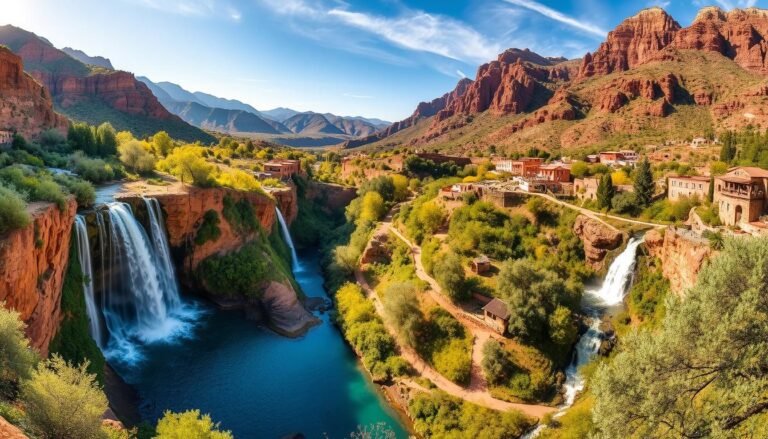
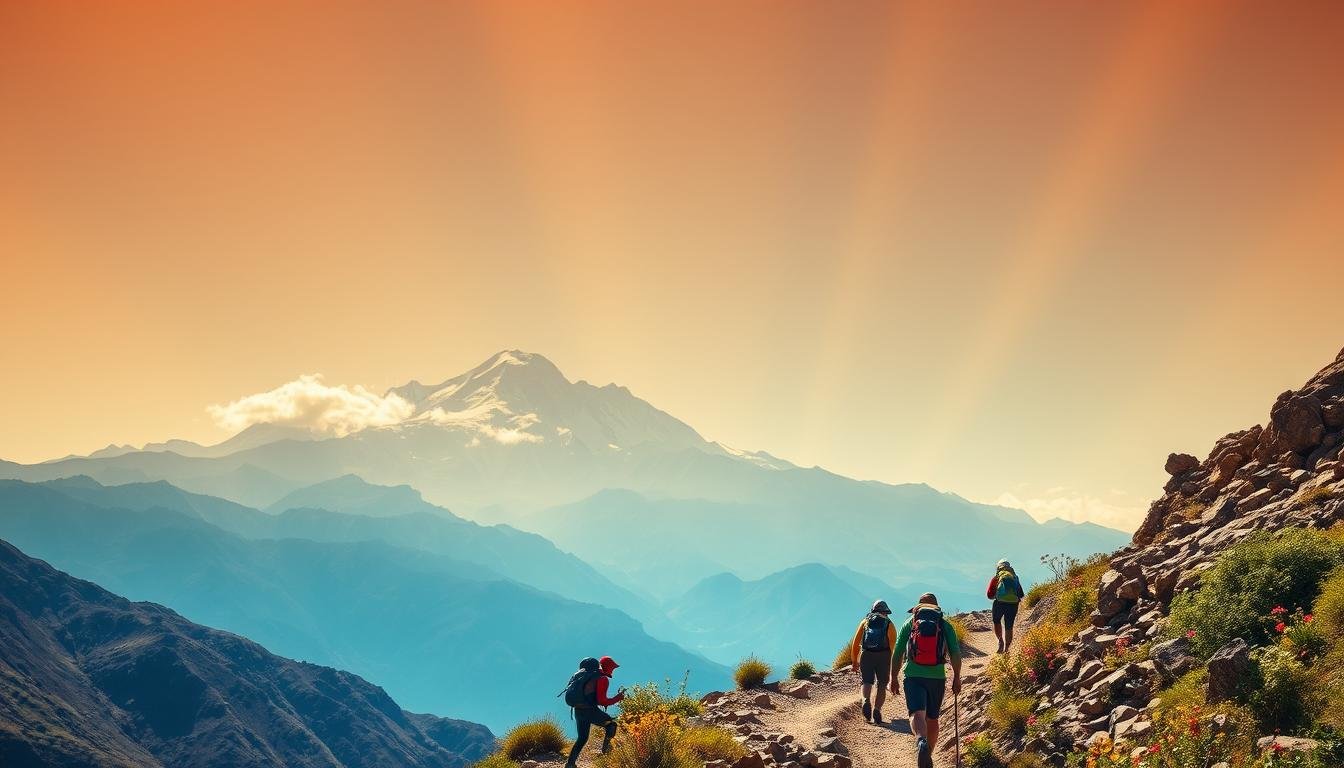
The Atlas Mountains have a wide range of landscapes. You’ll see:
- Snow-capped peaks over 4,000 meters high
- Lush green valleys with terraced fields
- Rocky gorges and dramatic cliffs
- Hidden waterfalls and alpine meadows
Authentic Berber Culture and Hospitality
A trek through berber villages is more than just walking. You’ll enjoy the warm welcome of Morocco’s indigenous people. Expect:
- Traditional mint tea ceremonies
- Home-cooked tagine meals
- Opportunities to see ancient crafts
- Interactions with local mountain communities
Trails for All Levels: From Beginners to Experts
No matter your trekking experience, the Atlas Mountains have trails for you. From easy valley walks to tough summit climbs, there’s a path for everyone.
Best Routes for a 5-Day Atlas Mountains Trekking Experience

Planning your Moroccan mountain hiking adventure needs careful route selection. The Atlas Mountains have many incredible trekking experiences for a 5-day trip. Each route offers unique challenges and stunning views for an unforgettable journey.
Exploring the Atlas Mountains, you’ll find four main routes. They are known for their beauty and diversity:
- Toubkal Ascent: A classic route covering 30 km round trip, reaching 4,167m altitude
- M’Goun Massif Circuit: An extensive trek spanning 70-90 km with peaks up to 4,071m
- Azzaden Valley Trek: A scenic route passing through valleys at elevations up to 3,000m
- Aït Bougmez Trek: A culturally rich pathway through traditional Berber landscapes
Your choice depends on your fitness, interests, and what you want to experience. The Toubkal Circuit lets you summit North Africa’s highest peak. The M’Goun Massif offers a secluded wilderness experience.
“The mountains are calling, and you must go!” – John Muir
Each route has something unique: technical climbing, cultural interactions, or stunning views. Think about your skill level and what you want to achieve when choosing your mountain journey.
Toubkal Circuit: Conquering North Africa’s Highest Peak
The Mount Toubkal expedition lets adventurers reach North Africa’s highest peak. It’s in the High Atlas Mountains’ heart. This trek is a mix of stunning views and tough climbs.
Your climb will show you amazing views and tough paths. You’ll see different mountain areas. It’s a journey full of adventure.
What to Expect on the Toubkal Ascent
The mount toubkal expedition has a clear path:
- Start from Imlil village (1,740m elevation)
- Trek to Toubkal Refuge (3,207m)
- Pre-dawn summit push to 4,167m peak
- Panoramic views across High Atlas range
Physical Demands and Altitude Considerations
Climbing Toubkal needs a lot of physical and mental effort. You need to be in good shape and ready for the high altitude.
| Altitude Range | Difficulty Level | Recommended Preparation |
|---|---|---|
| 1,740m – 3,207m | Moderate | Basic hiking fitness |
| 3,207m – 4,167m | Challenging | Altitude acclimatization |
Stay hydrated and watch for altitude sickness. Keep a steady pace to enjoy the climb.
Exploring the M’Goun Massif: A Less Touristic Alternative
Looking for a real mountain adventure in Morocco? The M’Goun Massif is a hidden treasure in the High Atlas Mountains. It’s perfect for those who want to avoid crowded trails.
The M’Goun Massif is 4,071 meters high, just 100 meters shy of Toubkal. Yet, it gets much fewer visitors. This makes it ideal for those who prefer quieter trails.
- Typical trek duration: 5-7 days
- Total distance covered: 70-90 kilometers
- Starting point: Agouti Village in Aït Bougmez Valley
- Difficulty level: Moderate
Your trek will take you through stunning landscapes. You’ll see lush valleys, dramatic gorges, and remote Berber villages. It’s a chance to experience real mountain culture and see how locals live.
Pro tip: Hiring an experienced local guide is strongly recommended due to the region’s remoteness and complex terrain.
Getting there is a bit of an adventure. The trailhead is about six hours from Marrakech. It’s a journey into Morocco’s untouched mountain beauty.
Planning Your Itinerary: Day-by-Day Breakdown for 5 Days
Planning your atlas mountains trekking trip needs careful thought and flexibility. Your 5-day journey in the imlil valley will be unforgettable. It combines physical challenges with cultural discoveries.
Your trek will change as you explore different landscapes each day. Guides suggest customizing your route based on your fitness and interests.
Day 1: Arrival and Acclimatization in Imlil
Your adventure starts in Imlil, the Atlas Mountains’ entrance. This day is for adjusting to the high altitude and getting ready for your trek. Key activities include:
- Meet your local guide
- Check hiking equipment
- Short orientation walk
- Enjoy traditional Berber tea
Day 2: Trekking to Mountain Refuges
Your first full day of hiking is 4-6 hours long. You’ll climb through beautiful mountains. By late afternoon, you’ll reach mountain refuges, where you’ll live like the locals.
| Distance | Elevation Gain | Difficulty |
|---|---|---|
| 12-15 km | 800-1200 meters | Moderate |
Day 3: Summit Day or Valley Exploration
This day is the toughest. Summit seekers will start early. Those who prefer can explore local valleys and traditional landscapes.
Day 4: Berber Villages and Cultural Immersion
Today, you’ll visit traditional Berber communities. You’ll experience local life through:
- Village walks
- Traditional meal preparation
- Artisan craft demonstrations
- Local market visits
Day 5: Return Journey and Reflection
Your last day is about returning home and reflecting on your trek. You can take photos, buy local crafts, and celebrate your journey.
“The mountains are calling, and I must go.” – John Muir
Best Time to Visit the Atlas Mountains for Trekking
Planning your trek in the Atlas Mountains needs careful thought about the seasons. Each season brings its own challenges and joys for hikers.
Knowing the seasons is key for a great trek. Here’s when to go for the best experience:
- Spring (March-May): Great for green landscapes and mild weather
- Temperature range: 15-25°C
- Wildflowers in full bloom
- Rivers and streams at their most vibrant
- Autumn (September-November): Ideal for stable weather and fewer crowds
- Temperature range: 18-28°C
- Golden landscape colors
- Minimal tourist traffic
Summer and winter have their own special conditions for hikers:
| Season | Temperature | Trekking Suitability | |
|---|---|---|---|
| Summer (June-August) | 35-45°C in valleys | 10-20°C at high altitudes | Early morning high-altitude treks recommended |
| Winter (December-February) | -10°C to 10°C at high elevations | Advanced trekkers only, winter gear required |
Your perfect trek time depends on your experience, fitness, and what you want to see. Spring and autumn are the top seasons for hiking in Morocco. They offer great conditions and stunning views.
Essential Gear and Packing List for Your 5-Day Trek
Getting the right gear is key for a great Atlas Mountains trek. Your equipment must be strong, light, and flexible for the varied terrain and weather. Choosing the right clothes, shoes, and technical gear will keep you comfortable and safe on this amazing trip.
Footwear and Clothing Essentials
Choosing the right shoes is vital for trekking in the Atlas Mountains. Your hiking boots should have:
- Waterproof and breathable construction
- Excellent ankle support
- Vibram or similar high-grip soles
- Well broken-in before the trek
Clothing for the trek needs a smart layering plan. Pack versatile items that can handle the changing mountain weather:
- Moisture-wicking base layers
- Insulating mid-layers (fleece or lightweight down jacket)
- Waterproof outer shell
- Quick-dry hiking pants
- Warm hat and sun protection
Camping and Navigation Equipment
Your technical gear should be light but complete for trekking in the Atlas Mountains. Key items include:
- 40-50 liter backpack
- Four-season sleeping bag
- Insulated sleeping pad
- Reliable headlamp
- Trekking poles
- Water purification system
- Detailed topographic maps
Pro tip: Many guided treks offer group equipment, so check what’s included before packing. Always choose gear that balances weight, function, and durability for your mountain adventure.
Hiring a Guide vs. Solo Trekking: Making the Right Choice
Planning your Atlas Mountains guided tours? You have to decide between a local guide or going solo. Your experience, comfort level, and interest in local culture play big roles in this choice.
Guides are key for exploring the Atlas Mountains’ tricky terrain. They know the area like the back of their hand. They show you paths and spots that most visitors never see.
- Provide expert navigation through challenging landscapes
- Offer cultural insights and language translation
- Ensure safety in remote mountain regions
- Facilitate unique local interactions
Going solo in the Atlas Mountains needs a lot of prep and skills. You’ll need:
- Advanced navigation abilities
- Comprehensive mountain safety training
- Robust language skills
- Complete self-sufficiency
| Guide Services | Cost Range | Recommended For |
|---|---|---|
| Local Independent Guide | $50-$80 per day | First-time visitors |
| Agency-Provided Guide | $70-$100 per day | Comprehensive support |
Pro tip: For most trekkers, hiring a guide turns a good Atlas Mountains trip into an amazing cultural journey.
Even with relaxed rules, a guide is the best way to enjoy the Atlas Mountains’ beauty and traditions. Your adventure is waiting. Choose wisely!
Where to Stay During Your Atlas Mountains Trek
Planning your stay is key for a great Atlas Mountains trek. The mountains have many places to stay, from simple shelters to places that let you dive into local culture. Where you choose to rest can make your trip more enjoyable and memorable.
In the Atlas Mountains, you can find everything from cozy mountain refuges to lovely guesthouses. Each spot has its own perks for those exploring this beautiful area.
Mountain Refuges: High-Altitude Shelters
Mountain refuges are important stops on your trek. They usually have:
- Dormitory-style sleeping arrangements
- Communal dining areas
- Basic bathroom facilities
- Affordable overnight rates
Guesthouses: Cultural Connections
Guesthouses in Berber villages offer a real taste of local life. You’ll get:
- Warm hospitality from local families
- Home-cooked traditional meals
- Insights into mountain culture
- Comfortable private or shared rooms
Bivouacs: Wilderness Camping
For the bold, camping in the wilderness is a unique experience. Guided treks include:
- Pre-setup tent camps
- Sleeping mats and equipment
- Stunning starlit nights
- Complete wilderness immersion
Your choice of where to stay greatly affects your Atlas Mountains adventure. Pick carefully to find the right mix of comfort, culture, and adventure.
Safety Tips and Altitude Acclimatization Strategies
Trekking in the high atlas hiking trails needs careful planning and knowing about health risks. Altitude sickness is a big challenge for hikers. Knowing how to prevent and manage it can make your trip safe and fun.
Your body needs time to get used to the lower oxygen levels at high places. Important steps for acclimatization include:
- Ascend gradually, limiting elevation gain to 300-500 meters per day
- Stay extremely well hydrated (3-4 liters of water daily)
- Recognize early symptoms of altitude sickness
- Take rest days to allow your body to adjust
Watch for these critical altitude sickness symptoms:
| Symptom | Action |
|---|---|
| Persistent headache | Rest and hydrate |
| Dizziness | Consider descending if symptoms worsen |
| Extreme fatigue | Slow down and monitor condition |
Before starting your high atlas hiking trails adventure, talk to a healthcare professional about preventive medications like Diamox. Physical preparation is also key – start training 4-6 weeks before, focusing on heart health and strength.
Safety is more than just altitude. Make sure to pack important items like detailed maps, GPS, first-aid kit, and emergency communication tools. Always tell someone your full plan and when you’ll be back.
Remember: The mountain will always be there. Your safety comes first.
Pro tip: The most successful trekkers prioritize careful planning, listen to their bodies, and remain flexible with their goals.
Conclusion
Your journey through the Atlas Mountains is more than a trek. It’s an experience that combines stunning landscapes, cultural discovery, and personal challenge. The mount toubkal expedition lets adventurers explore North Africa’s most beautiful mountain range. Routes are available for all skill levels and interests.
Atlas Mountains trekking offers an adventure unlike any other. It’s perfect for those seeking high-altitude challenges or cultural experiences. Every step reveals a world of natural beauty and human history, from rugged peaks to traditional Berber villages.
Getting ready for your trek is key. Choose the right season, pack the right gear, and know the terrain. Success comes from good planning, physical prep, and an open mind. The Atlas Mountains are ready for adventurers eager to explore and connect with nature.
Your trek will be a journey of self-discovery and cultural exploration. It’s a chance to challenge yourself and make lasting memories. With the right preparation, your adventure in the Atlas Mountains will be life-changing and inspiring.
FAQ
Is a 5-day trek suitable for beginners in the Atlas Mountains?
Yes, the Atlas Mountains have trails for all. You can start with easier valley routes or less technical treks. Guided tours can adjust the difficulty to fit your level.
What is the best time of year to trek in the Atlas Mountains?
Spring (March-May) and autumn (September-November) are best. These seasons have good weather and comfortable temperatures. Summer is hot, and winter is for serious climbers.
Do I need a guide for trekking in the Atlas Mountains?
Guides are optional but highly recommended. They help with navigation, share cultural insights, and ensure safety. They also help you understand local customs and navigate tough trails.
What level of physical fitness is required for Atlas Mountains trekking?
You need a moderate fitness level. Be ready to walk 4-6 hours daily on uneven terrain. Having some hiking experience is good, but not necessary. Start training 4-6 weeks before your trip.
How high are the mountains in the Atlas range?
Mount Toubkal is 4,167 meters high. Other peaks are between 3,500-4,100 meters. The mountains offer walks from easy to very challenging.
What accommodation options exist during mountain treks?
You can choose from mountain refuges, guesthouses, camping sites, and lodges. Options range from basic to more comfortable places with Berber hospitality.
What should I pack for a 5-day trek?
Pack sturdy boots, layered clothes, a waterproof jacket, and warm layers. Don’t forget a sleeping bag, headlamp, sun protection, first-aid kit, water purification system, and snacks. A detailed list depends on your route and season.
Are there cultural interactions with local Berber communities?
Yes! Trekking routes often go through Berber villages. You can experience local culture, share mint tea, and see traditional crafts. Hiring a local guide enhances these experiences.
What are the primary safety concerns for Atlas Mountains trekking?
Safety concerns include altitude sickness, weather changes, navigation, and fitness. Proper acclimatization, hiring an experienced guide, and carrying the right gear are key. Understanding mountain safety is also important.
How do I get to the Atlas Mountains from Marrakech?
Most treks start from Imlil, a 1.5-hour drive from Marrakech. Trekking companies often provide transport, or you can book private transfers. Marrakech’s proximity makes the Atlas Mountains a great trekking spot.